

The Brand That Made Sunscreen a Vibe
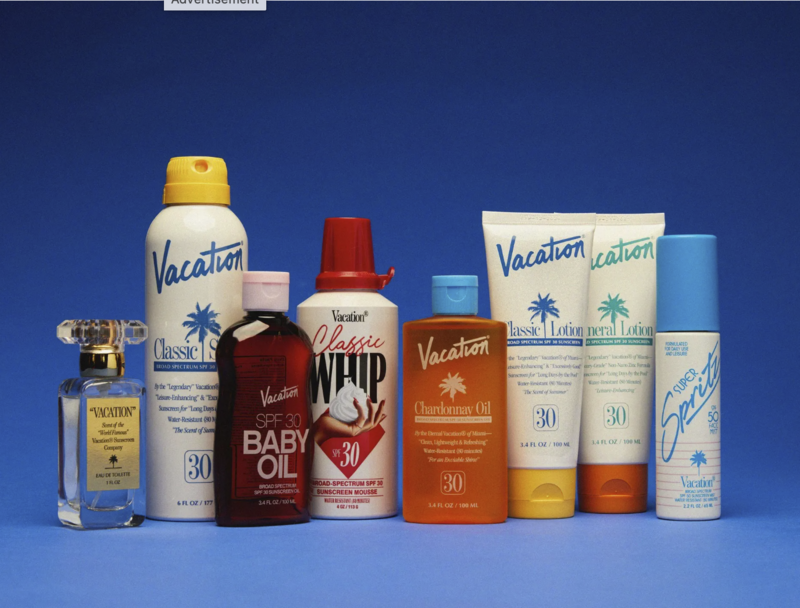
We've started documenting the brands that make us stop and pay attention. Not because they're loud, but because they're doing something worth learning from. Vacation is one of them.
What started as a casual purchase turned into a forty-minute deep dive on their website that we have zero regrets about.
Selling a Feeling, Not a Product
Vacation Inc. launched in 2021 with a premise that sounds simple but is actually incredibly hard to execute: make sunscreen aspirational. Not just functional. Not just clean or reef-safe or dermatologist-approved, though it is all of those things. Aspirational. The kind of product that makes you feel something before you even open the bottle.
Their tagline — "The World's Best Smelling Sunscreen" — tells you everything about how they think. They didn't lead with SPF levels or ingredient lists. They led with a sensory promise. Coconut. Banana. Something that smells like a pool deck in 1986. They made the scent the hero, which is a bold move in a category that typically competes on protection, price, and dermatologist endorsements.
That decision to anchor the brand in feeling rather than function was the foundation everything else was built on. And it worked because they never wavered from it.
The 80s Universe They Built
What sets Vacation apart isn't just the nostalgia angle, it's how completely they committed to it. This isn't a brand that slapped a retro font on a bottle and called it a day. They built an entire world.
The website feels like you've stumbled onto a forgotten vacation resort from another era. There are old-school coupons, fictional hotel branding, and copy that reads like it was written by someone who genuinely lived through that decade and misses it deeply. The product names, like Classic Lotion, Whipped SPF Mousse, Chardonnay Oil, feel like items from a poolside bar menu at a Boca Raton resort circa 1983. Even their partnership with Poolsuite FM, the nostalgia-driven internet radio station built around the soundtrack of summer leisure, was a perfect brand alignment. Two brands, same frequency.
This level of world-building is intentional. It creates immersion. When every detail of a brand reinforces the same idea, the consumer doesn't just buy a product, they buy into a place. A feeling. A version of themselves on a lounge chair with nowhere to be.
That's the difference between a product and a brand. Vacation understood that from day one.
Launching Into a Crowded Market, and Standing Out Anyway
The sunscreen market is not a small one. It was valued at over $11 billion globally in 2021 when Vacation launched, with projections to keep climbing as skin cancer awareness grows and the skincare-as-self-care movement continues to expand. Breaking into that space as a new brand, without the backing of a legacy beauty conglomerate, is a legitimate challenge.
Vacation's answer wasn't to compete on the same terms as everyone else. They didn't try to out-science Neutrogena or out-wellness Supergoop. They found a lane that was entirely their own: premium, playful, nostalgia-coded.
Their launch strategy leaned heavily on earned media and cultural buzz rather than paid advertising. The brand generated press coverage almost immediately, landing in publications like Vogue, GQ, New York Magazine, and Architectural Digest within its first year. That kind of editorial placement doesn't happen by accident. It happens when a brand has a story that's actually interesting to tell, and Vacation had one.
They also built smart retail partnerships. Getting into Target was a significant milestone, and the way they executed that presence — a display that looked and felt like the rest of the brand, not like a generic big-box endcap — proved that their identity could hold up at scale. That's harder than it sounds. A lot of brands lose the thread when they move from DTC to mass retail. Vacation didn't.
The Role of Humor in Brand Building
One of the most underappreciated elements of Vacation's strategy is how funny they are. Not in a desperate, try-hard way. In a dry, self-aware way that signals intelligence without alienating anyone.
Their copy is full of it. Product descriptions that read like travel brochures from a fictional resort. Disclaimers that aren't really disclaimers. An overall tone that never takes itself too seriously, even while clearly taking the craft of branding very seriously.
Humor in marketing is genuinely difficult to pull off at a brand level. It can feel forced, off-brand, or like it's trying to go viral. Vacation's humor never feels like that because it's not a tactic layered on top of the brand. It's baked into the DNA. The whole brand is a wink. And because it's consistent, it never reads as cheap.
There's also something strategically smart about using humor in the sunscreen category specifically. Sun care has historically been marketed through fear — skin damage, early aging, the very real risk of melanoma. Vacation didn't ignore those realities, but they refused to lead with them. They chose to make applying sunscreen feel like the beginning of a good day rather than a preventive measure against a bad outcome. That shift in framing is subtle, but it changes everything about how the product feels to use.
What Their Growth Says About the Strategy
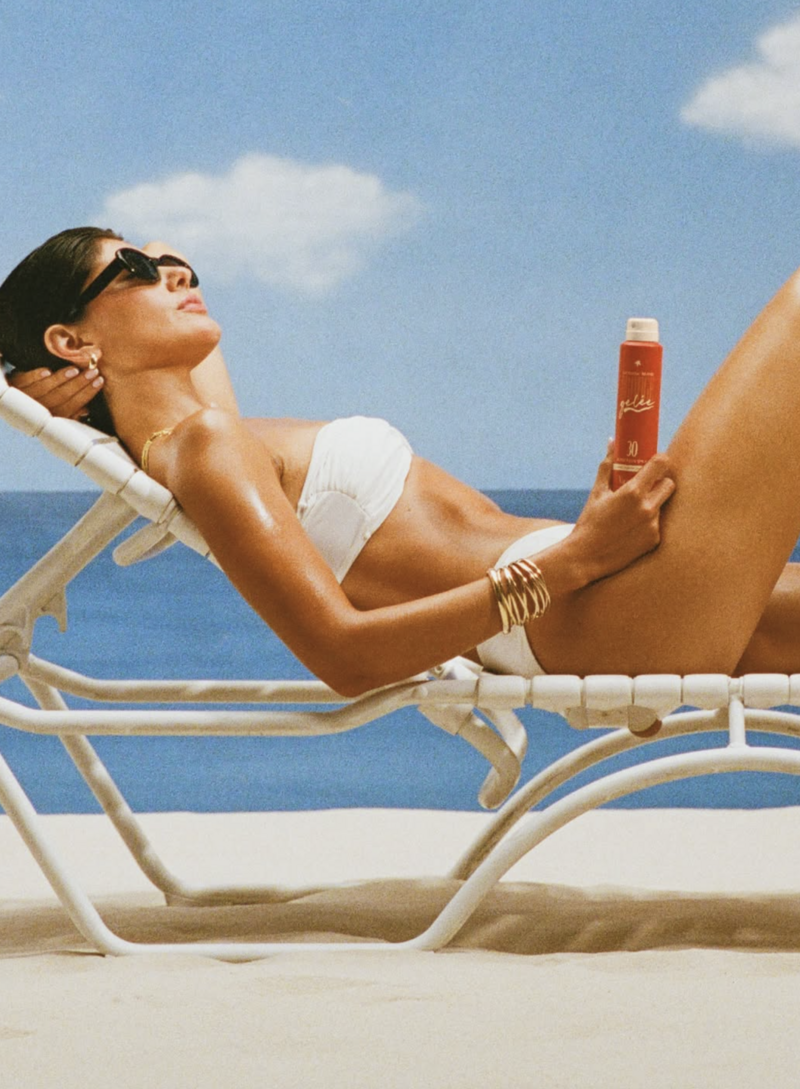
By 2023, Vacation had grown from a buzzed-about DTC launch into a brand stocked at major retailers reflecting a range that demonstrates how broad their appeal actually is. Beauty shoppers, outdoor enthusiasts, and everyone in between. That kind of retail spread usually signals a brand that has figured out how to speak to more than one type of consumer without losing its identity in the process.
Their social presence grew alongside their retail footprint. On Instagram, they maintained the same visual world they built on their website — sun-drenched, '80s-coded, consistently beautiful — while using the platform to engage with the cultural moment around them. They collaborated with creators who fit the aesthetic rather than chasing follower counts, which kept the brand feeling curated even as it scaled.
The earned media kept coming too. By their third year, Vacation had been covered not just as a product but as a case study. A brand that did something different and it worked. That kind of press has a compounding effect. It builds authority, attracts new retail partners, and gives the brand a cultural legitimacy that paid media alone can't create.
The Questions It Leaves Us With
We study brands like Vacation because they're useful. Not just interesting but useful. They give us a sharper lens for the work we do every day.
Because what Vacation built isn't magic. It's clarity. Every decision — the scent, the packaging, the copy, the retail partners, the cultural collaborations — ran through the same filter: does this feel like leisure? Does this feel like us? And if the answer was no, they didn't do it.
That kind of discipline is rare. And it's the reason they still feel fresh four years in, in a market that churns through trends constantly.
It makes us come back to the questions we ask with every brand we work on. Is your messaging clear? Does it evoke a feeling that actually matches what you're building? Have you defined that feeling, or are you still borrowing language and aesthetics from brands that were built for a completely different audience?
The brands that last aren't the ones that followed the moment. They're the ones that built something specific enough to stand on its own, and then had the discipline to protect it.
Vacation is a good reminder of what that looks like. We'll be keeping an eye on what they do next.
