

Brand POV Is the New Growth Strategy Nobody Is Talking About
For the past decade, the marketing conversation has been dominated by channels. Which platform. Which format. Which algorithm. Which ad unit. The assumption, rarely questioned, was that growth was a distribution problem. Get in front of enough people, often enough, and the brand would follow.
That assumption is breaking down.
Not because distribution stopped mattering. It still matters enormously. But because in a world where every brand has access to the same channels, the same tools, the same targeting capabilities, and increasingly the same AI-generated content, distribution alone is no longer a competitive advantage.
What separates the brands growing right now from the ones spending and stalling is something older and harder to manufacture. It is point of view. A clear, consistent, unapologetic perspective on the world that makes a brand not just visible but meaningful. Not just seen but believed.
Brand POV is the new growth engine. And most brands are still looking for the answer in their media budget.
What a POV Actually Is
A brand point of view is not a tagline. It is not a mission statement drafted by committee and published on an About page. It is not a set of values printed on the office wall.
It is the answer to a specific and uncomfortable question: what does this brand actually believe?
Not what it sells. Not who it serves. What it believes. About the world, about its category, about the people it exists for, about what matters and what doesn't. A genuine brand POV is specific enough to exclude people. It is opinionated enough to generate disagreement. It is consistent enough that you could identify it without a logo.
Most brands don't have one. They have positioning. They have messaging. They have a carefully managed tone of voice designed to be appealing to the widest possible audience. And in optimizing for broad appeal they have engineered out the very thing that makes a brand worth caring about.
The brands growing on the strength of their POV made the opposite decision. They decided to mean something specific to someone specific, even at the cost of meaning less to everyone else.
The Brands Proving It
Patagonia
Patagonia's point of view is not complicated. The planet is in crisis and business has a responsibility to respond to that, even when it is commercially inconvenient. That belief is not a marketing position. It is a governing principle that shapes product decisions, supply chain decisions, legal decisions, and yes, marketing decisions.
In 2011, Patagonia ran a full-page ad in the New York Times on Black Friday with the headline "Don't Buy This Jacket." It was an ad asking people not to buy the product it was advertising. It went against every convention of retail marketing. It also generated more press coverage, brand conversation, and ultimately more sales than any promotional campaign the company had run.
That is what a genuine POV does. It creates moments that feel true because they are true. And audiences, who have developed extraordinary sensitivity to the difference between authenticity and performance, respond accordingly.
Patagonia's revenue has grown consistently for decades. Its customer retention is among the highest in the outdoor industry. Its brand value extends far beyond its product category. None of that happened because of its media spend. It happened because the brand has a point of view it has never compromised, and people trust it for exactly that reason.
Liquid Death
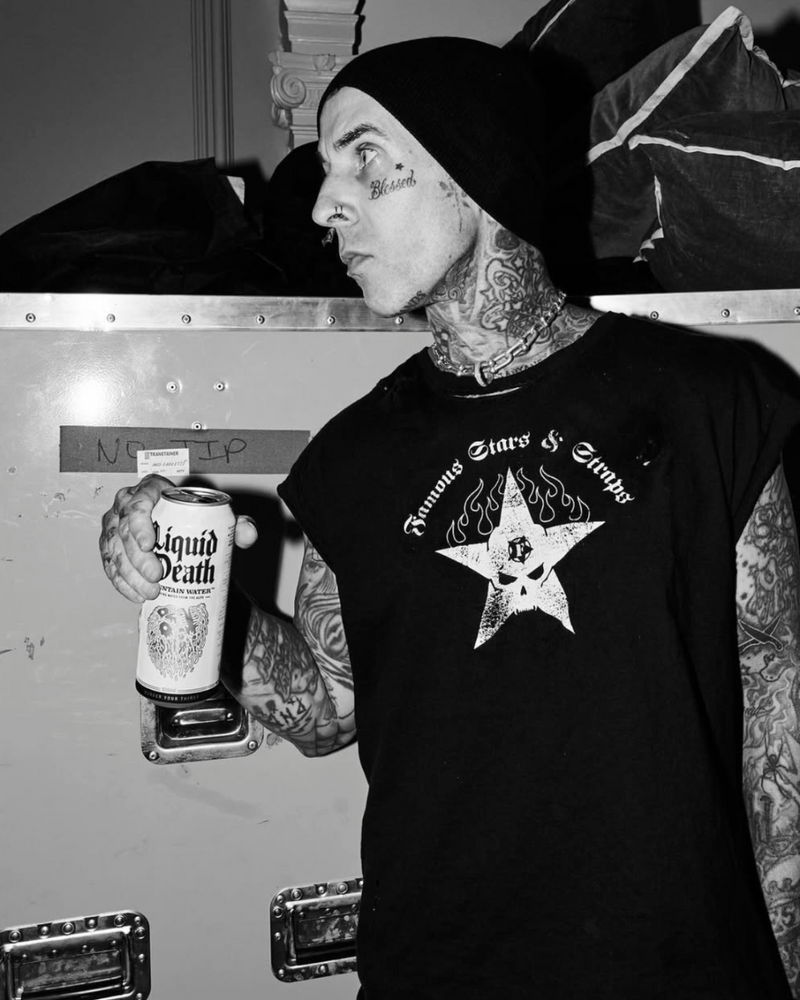
Liquid Death sells water. Canned water, to be precise. In a category so commoditized that differentiation should be nearly impossible, Liquid Death has built one of the most culturally resonant brands of the past decade.
The POV is simple and completely committed: water should be as entertaining as beer. The brand is loud, irreverent, and deliberately absurd. It names its products like heavy metal albums. It produces creative so unexpected that people share it without being asked. It has built a following that behaves more like a fan base than a customer base.
None of this is accidental. Liquid Death made a specific decision about who it was for and what it believed, and it has executed against that decision with remarkable consistency. The result is a brand that has achieved mainstream distribution and cultural relevance in a category that has never produced either before.
The product is water. The growth engine is POV.
Yeti
Yeti's point of view is quieter than Liquid Death's but no less defined. It believes that the people who spend their lives outdoors, who take their gear seriously, who would rather be on the water or in the backcountry than anywhere else, deserve products built to that standard rather than to a price point,
That belief shaped everything. The product, obviously. But also the visual identity, the ambassador strategy, the content, the retail experience. Yeti doesn't talk about coolers. It talks about the experiences that coolers make possible. It tells stories about the people who use its products. It has built a world that its customers want to be part of.
When Yeti launched its YETI Presents film series, it wasn't running an ad campaign. It was deepening a point of view through storytelling. The brand's growth from a niche outdoor product to a broadly coveted lifestyle object is a direct result of that consistency.

Why Playing It Safe Is the Most Expensive Strategy
Here is the uncomfortable truth about brand neutrality. It feels safe. It feels like risk management. If we don't say anything too specific, we can't alienate anyone. If we don't take a position, we can't be criticized for it.
What it actually produces is invisibility.
In a crowded market, a brand without a point of view is not inoffensive. It is forgettable. It competes entirely on price and availability, the two most expensive ways to compete. It spends more on acquisition because it generates less organic word of mouth. It retains customers less effectively because there is no belief system holding them in place. It is vulnerable to any competitor willing to undercut on price or outspend on distribution.
A brand with a genuine POV is structurally different. Its customers are advocates, not just buyers. Its content generates organic reach because people share things they believe in. Its marketing is more efficient because the brand is already doing work before the paid media starts. It can charge a premium because it has created a category of one.
What This Means in Practice
Developing a genuine brand POV is not a marketing exercise. It is a strategic one, and it starts with honest questions that most brands avoid.
What do we actually believe that our competitors don't? What would we be willing to lose business over? Who are we specifically for, and who are we not for? What would our brand say if it weren't trying to please everyone?
The answers to those questions, pursued honestly and executed consistently, are the foundation of a brand that grows on the strength of what it stands for rather than the size of its budget.
Distribution gets you in the room. POV is what makes people stay.
