

Chavie Bruk on What Happens When Life Doesn't Go According to Plan
“Everybody has things that didn't go the way they thought they were going to go. The question is, what did you do?”
Chavie Bruk grew up in San Antonio, Texas, the oldest of nine children. Her parents had opened Chabad of San Antonio more than 40 years ago, and the family lived in the same building where they ran their community center.
There wasn't much privacy. The door was always open. Someone was always coming in, and the work never really stopped.
Nearly four decades later, all nine Bruk siblings are doing some version of what their parents did.

“If we're all doing the same thing that they did, we obviously couldn't have hated it that much.”
Chavie has spent nearly 20 years in Bozeman, where she and her husband, Rabbi Chaim Bruk, serve as co-CEOs of Chabad of Montana. She's also a mom of five and the host of the Totally Unexpected podcast and Substack.
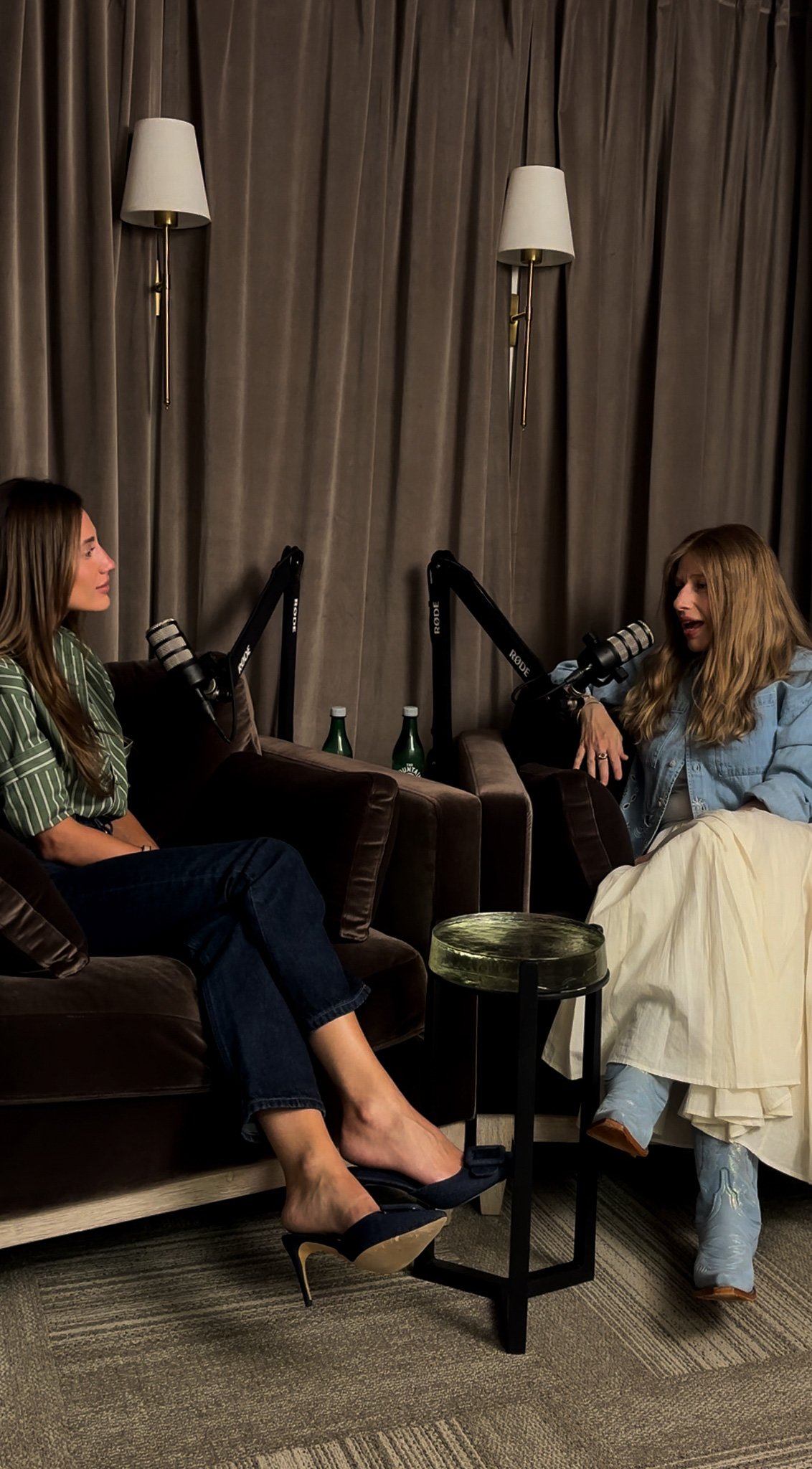
On the latest episode of The Brief, Chavie sat down with Liv to talk about faith, family, motherhood, community and what happens when the life you imagined doesn't quite happen.
“There’s no such thing as balance.”
People often ask Chavie how she manages to balance work, family, community and everything else.
Her answer: she doesn't.
Some seasons require more of her at home. Other seasons leave more room for programs, projects and the things she wants to pursue for herself. For Chavie, the goal isn't making everything perfectly even. It's recognizing what season you're in and giving yourself some grace when you can't do it all.
That mindset took years to develop. Growing up in a culture centered around giving to others, even taking care of herself could feel selfish. Learning to set boundaries is something she's still working on.
“The good stuff is on the opposite side of hard.”
Chavie learned that lesson early. At 14, she left home to attend high school in Chicago because there wasn't a Jewish high school in San Antonio. At 18, she spent a year at a seminary in northern Israel, choosing a small Israeli program over a more comfortable American one.
The experience was intense. Classes were mostly in Hebrew, her days ran from 7:30 in the morning until 7:30 at night, and the mattresses were thin pieces of yellow foam on wrought-iron beds.
She remembers it as incredible, even if she says she would never do it again.
“I get so much more than I give.”
Montana wasn't part of the plan either. When Chavie and Chaim were figuring out where they would eventually do outreach, Chaim had one request: “I want to go where there's a 7-Eleven.”
They married in March, visited Bozeman that summer and moved there in 2007. Nearly two decades later, Chavie doesn't describe Montana as a sacrifice.
There isn't a kosher restaurant, and her kids didn't grow up in Jewish schools, but she talks about the mountains, public schools and community with genuine gratitude. Her favorite spots include Main Street, Hyalite, Yellowstone and the M. For skiers, she has one obvious recommendation: Bridger.
“Sometimes we have to be squeezed to get the good stuff.”
At 24, Chavie and Chaim learned they wouldn't have biological children. That wasn't the life she had imagined. Their family eventually grew through adoption, and today they have five children. Chavie is honest about how difficult that journey has been, and she still has days when she tells Chaim she isn't cut out for it. But she learned not to pretend hard things weren't hard.
When she went through infertility, she also chose to talk about it publicly, even when people questioned why she was sharing something so personal. For Chavie, keeping it completely hidden suggested there was something shameful about it. Instead, she wanted other people going through the same thing to know they weren't alone. After a particularly difficult IVF cycle in New York, she bought herself a pair of Tory Burch heels. She still has them, and they remind her of what she made it through.
“No one else is you.”
Chavie had wanted to start a podcast for years, but kept asking herself the same question: Why does the world need another podcast? Her producer gave her a simple answer: no one else is her.
Two years and 51 episodes later, Totally Unexpected has become a substantial part of her work. Her episodes can run for two hours, and while people tell her they're too long, she's not interested in forcing a 20-minute conversation. “I'm not passionate about a 20-minute conversation.”
She's still figuring out the business side, too. The podcast isn't making money yet, and she's learning to be more comfortable saying what she wants instead of automatically saying yes.
When Liv asks what she would tell her 29-year-old self, Chavie's answer is unexpected: nothing. She doesn't believe there are shortcuts to becoming the person you are in your 40s. You have to live through your 20s and 30s first. “We're all so human.”
The life Chavie has now isn't the life she expected at 24. Montana wasn't the obvious choice. Motherhood didn't happen the way she imagined. Her career has taken turns she couldn't have planned for.
But she kept going. Sometimes the thing you end up building isn't what you originally wanted. Sometimes it's better. Sometimes it's simply different.
Either way, you still have to build it.
Listen to Episode 12 of The Brief: Faith, the Unexpected & Building Community in Montana.
