
Why Some Brands Become Bigger Than the Product
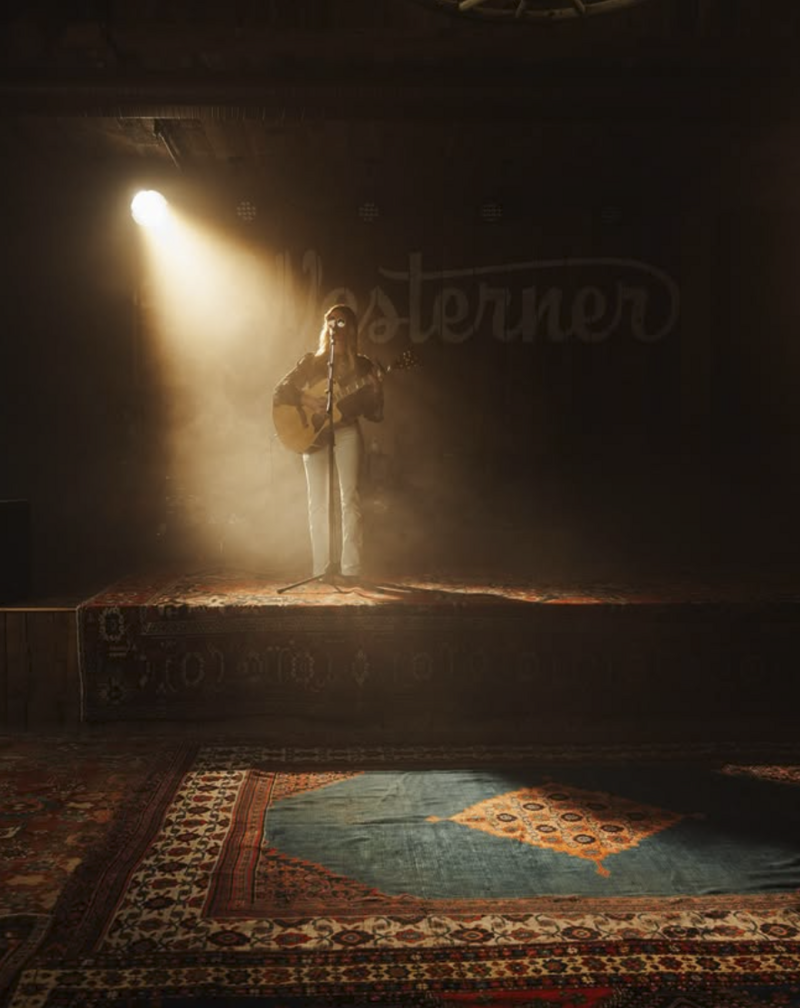
“District Loom is a Bozeman-based brand known for its curated collection of vintage and antique rugs. But it’s really become something much bigger than that.”
That’s how Liv Longin introduces founder Heather Cade at the beginning of episode two of The Brief.
And honestly, it’s the line that stayed with us most after the conversation ended.
Because District Loom is technically a rug company. But listening to Heather talk about the business, it becomes clear very quickly that the success of the brand has very little to do with rugs alone.
The conversation moves through interiors, entrepreneurship, visibility, aesthetics, burnout, routines, travel, friendship, and founder identity. Somewhere in the middle of all of it is a larger question many modern brands seem to be navigating right now:
What actually makes people connect to a brand today?
For Heather, the company started in an unexpectedly unglamorous way.
“Honestly, it started out by me selling rugs from my car,” she says in the episode. “I had a lunch hour and I’d meet up with people in a CVS parking lot and take rugs out of the back of my car.”
At the time, she was still working full-time as a nurse practitioner.
There’s a tendency online right now to flatten entrepreneurship into polished founder narratives. The clean version. The hindsight version. But one of the more interesting parts of the conversation is how much of District Loom’s growth seems rooted less in scale and more in clarity of perspective.
Heather talks openly about growing up surrounded by architecture and interiors on Cape Cod, describing how her eye for design was shaped early on.
“My eye was trained really young,” she says. “It became appreciative of beautiful design and architecture.”
That perspective eventually became part of the business itself.
Not in an overly manufactured way. More in the sense that the brand developed a recognizable point of view. And increasingly, that seems to be what separates many modern brands from the rest of the market.
Consumers can source products almost anywhere now. What feels harder to replicate is taste. Restraint. Curation. A specific lens.
During the episode, Liv points out that many people assume District Loom operates with a massive internal team because of how established the brand appears online. Heather laughs at the idea.
“People think we have cubicle land and a team of 50,” she says. “And then they walk in and realize it’s basically just me.”
That moment touches on another shift happening across creative industries right now.
Some of the most visible brands are no longer necessarily the largest. In many cases, they’re intentionally lean, founder-led, and heavily driven by creative direction rather than operational scale.
Heather explains that District Loom still technically operates with only one full-time employee, alongside a small contractor team supporting areas like content and production.
That structure has become increasingly common across modern branding, particularly in industries shaped heavily by aesthetics and digital storytelling.
At the same time, the episode never romanticizes entrepreneurship entirely. Both Liv and Heather talk candidly about burnout, constant accessibility, and the reality that running a company rarely shuts off completely.

“A lot of people think when you’re out of the office, you’re out of the office,” Heather says. “And truthfully, the work never stops.”
What makes the conversation compelling is that it never fully lands on a neat conclusion about any of it.
The episode moves naturally between discussions of marketing strategy, founder pressure, Broadway trips, work-life balance, friendship, travel, routines, and identity. In some ways, that overlap may actually reflect the current state of branding itself.
The founder is no longer entirely separate from the company.
The lifestyle is no longer entirely separate from the marketing.
And audiences are increasingly drawn to brands that feel human rather than overly polished.
Not because consumers necessarily want perfection. But because they want perspective.
Maybe that’s why certain brands resonate beyond the product they technically sell.
