

Breaking the Fourth Wall in Digital Marketing
People aren’t dumb.
They know what an ad looks like.
They know what a scripted influencer line sounds like.
They know when a brand is trying a little too hard to feel “effortless.”
And the second something feels forced… they scroll.
So here’s what we’ve been playing with at BMD:
What happens when you stop pretending it’s not marketing… and you let the audience in?
Not in a way that cheapens the brand.
In a way that makes the audience feel like they’re part of it.
That’s what we mean by “breaking the fourth wall.”
What “Breaking the Fourth Wall” Means (In Marketing Terms)
In film, the “fourth wall” is the invisible boundary between the characters and the audience.
Breaking it = when someone looks directly at the camera and speaks to the viewer.
In marketing, it’s the same concept—just modernized.
It’s when a brand openly acknowledges the audience, the strategy, or the fact that what you’re watching is intentionally crafted.
It can sound like:
“Yes, we’re selling something.”
“Yes, we made this on purpose.”
“Here’s what didn’t make the final cut.”
“You’re in on it with us.”
This concept has been gaining traction as brands lean harder into transparency, personality, and “unfiltered” brand voice—especially on social platforms where the audience knows the game and loves calling it out. (This LinkedIn article breaks the shift down well: https://www.linkedin.com/pulse/breaking-4th-wall-marketing-new-era-unfiltered-brands-andre-zeferino-pugkf/)
Why This Works Right Now
The audience isn’t just consuming ads anymore—they’re reacting to them in real time.
They’ll comment things like:
“Okay wait this is actually genius marketing.”
or
“Whoever runs this account deserves a raise.”
That’s the shift: marketing literacy is now mainstream.
And when people understand the “why” behind what they’re seeing, transparency can lower that instinctive distrust that shows up when something feels overly polished or manipulative.
Instead of “why are you selling to me?” it becomes:
“Oh. You’re being honest. I respect that.”
How to Break the Fourth Wall (Without Losing the Vibe)
These are clean, brand-safe ways to do it while still feeling elevated.
1) The Insider Access Moment
Give them a peek behind the curtain, but make it intentional.
Examples:
“Come on set with us.”
“Here’s what the mood board looked like before we shot it.”
“This version didn’t make the final cut.”
Behind-the-scenes content works because it has depth. It lets people feel like they’re not just being marketed to—they’re being included.
If you want to do this in a way that still feels elevated, take notes from Loewe — they prove behind-the-scenes can look like art, not content.
Example: Loewe’s craftsmanship reel is a masterclass in behind-the-scenes content that still feels luxury. They’re not just showing the finished product — they’re showing the making of it. The hands, the materials, the precision, the time. It’s a reminder that “insider access” doesn’t have to look casual or messy to feel authentic. It can still be cinematic — it just lets the audience in on what makes the brand worth it.
Reel: https://www.instagram.com/p/DPeEmnEDOW0/
2) The Audience as a Character
Instead of talking at people, write them into the moment.
Examples:
“Your seat is waiting.”
“Welcome in.”
“Made for the people who…”
It’s subtle, but powerful—because it acknowledges the viewer without begging for attention.
3) The “One Meta Slide” Trick
Classic fourth-wall move, but tasteful.
If you’re doing a carousel or multi-frame post- most of it stays beautiful + on-brandand; one slide gives a tiny wink to the viewer
Example lines:
“This slide exists because we’re supposed to tell you what it is.”
“Okay, here’s the part where we do our job.”
“Yes, you want it. Yes, we planned that.”
Then right back into the aesthetic.
4) Let the Comment Section Direct What Happens Next
This is how you make content feel alive.
Examples:
“Which version should we drop next?”
“Pick the next colorway.”
“Do we post the full thing or keep teasing?”
The audience stops being a spectator and becomes part of the process.
5) The “We See You” CallbackThis one is powerful because it makes people feel noticed.
Luxury brands have mastered this by turning audience moments into brand language.
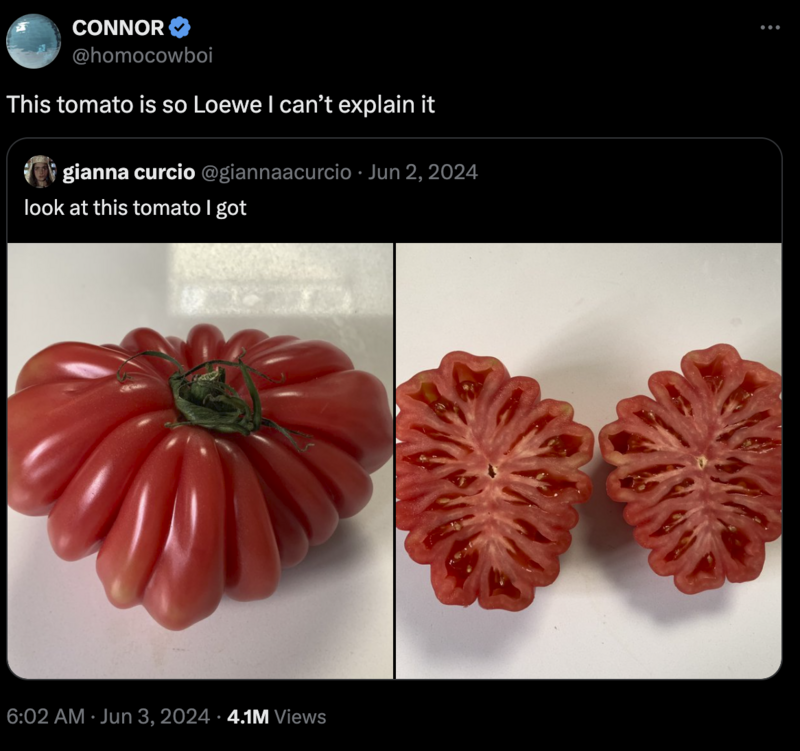
A perfect example: Loewe taking a viral internet moment—a tomato meme people were already associating with the brand—and turning it into an actual product. It wasn’t random. It was cultural listening turned into design. (WWD covered it here: https://wwd.com/pop-culture/culture-news/loewe-tomato-bag-jonathan-anderson-1236422799/)
For smaller brands, this can look like:
a recurring customer joke
a niche local reference
a “you had to be there” moment that becomes a mini tradition
It creates community without forcing it.
A Proof Point: Glossier Built the Brand by Letting People In
If you want a brand example that shows how powerful “invite them into the process” can be, Glossier is the obvious case study.
They didn’t just build a product line—they built a conversation.
They used content, community feedback, and audience participation to shape what the brand became, which created trust and loyalty that traditional beauty marketing couldn’t replicate. (This piece breaks it down well: https://ronntorossian.medium.com/glossiers-into-the-gloss-a-case-study-in-community-driven-beauty-marketing-9f3bd0ae1c6f)
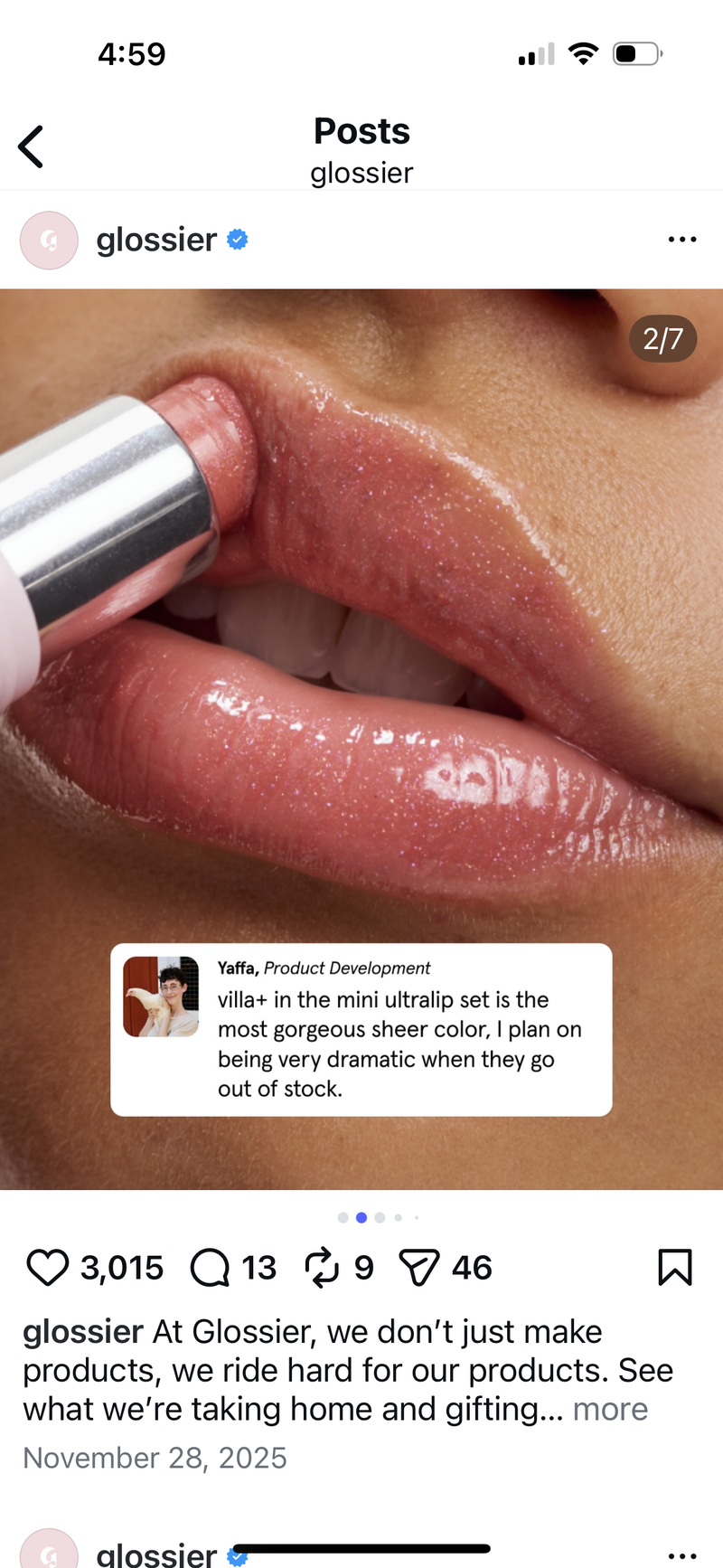
Glossier does this really well by featuring real team picks and quotes straight from inside the brand—like this post—so the audience feels like they’re getting the “group chat” version of the product, not a polished sales pitch.
Post: https://www.instagram.com/p/DRmrjh5EfBq/?img_index=1
That’s fourth-wall marketing at its best:
not “look what we made,” but “come build this with us.”
The Point
We’re not saying every brand needs to do this.
Breaking the fourth wall only works when it adds something real:
clarity, connection, humor, trust, belonging.
But for brands trying to stand out in a world where everyone is selling something, this is one of the cleanest ways to build loyalty fast:
Keep the aesthetic.
Let people in.
Make it feel human.
Treat your audience like they’re smart.
Because the best marketing doesn’t just look good.
It makes people feel like they’re part of something.
